

Office Furniture Color Psychology: How “Calming Blue” Boosts R&D Efficiency

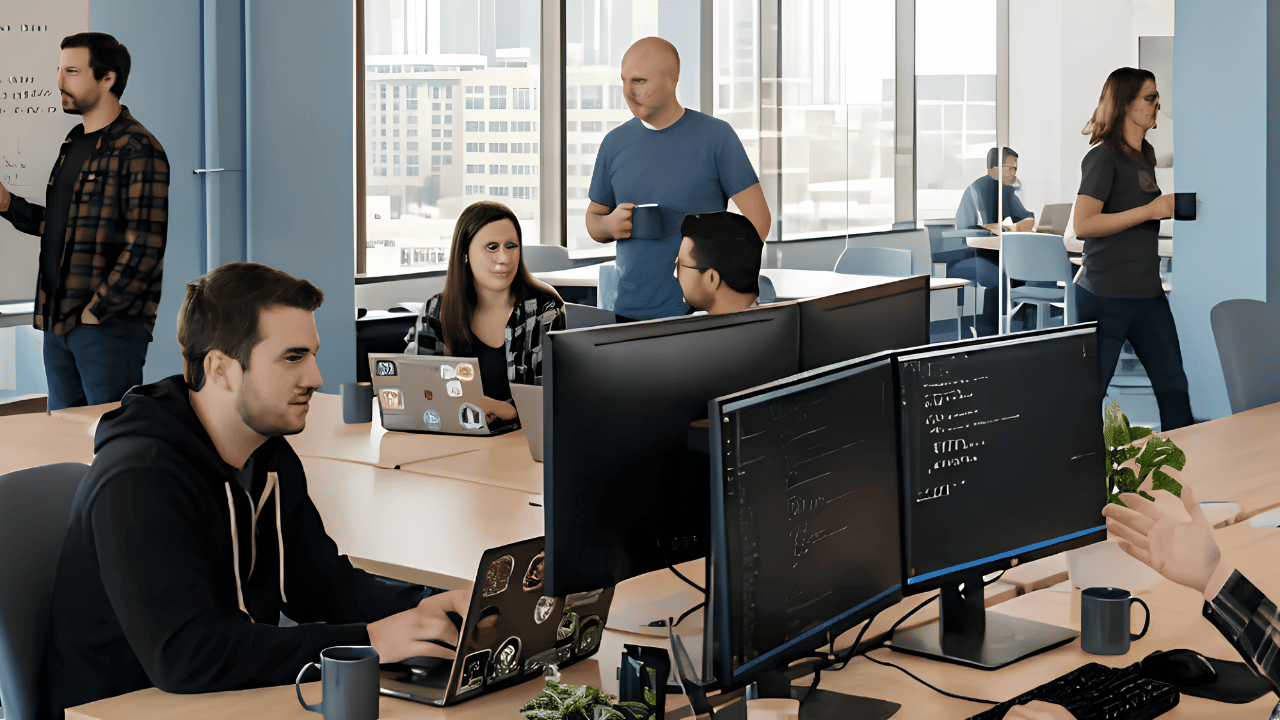
With the rise of the tech industry in the 21st century, the number of technology companies worldwide has surged. According to the latest reports from Forrester and Statista, as of 2026, the number of global tech startups has exceeded 150 million—an exponential leap from approximately 12,000 recorded in 2018 [1]. This explosion in tech growth has triggered a parallel demand for office furniture. Traditional procurement often fixates on aesthetics and pricing, overlooking the profound value of spatial color [2]. By utilizing B2B furniture platforms like click2connect, businesses can bridge the gap between supply and demand to secure furniture solutions that are scientifically color-matched for their specific needs
Modern workspace design and cutting-edge psychological theories suggest that color can alter cognition through subtle priming, thereby influencing productivity. This is particularly critical for R&D departments. Unlike creative teams that thrive on vibrant hues, world-leading tech giants often opt for “Calming Blue.” Steve Jobs, during the development of Apple Park, highlighted this philosophy in an interview with Fortune [3]. Steve understood that technology is often ‘hot’ and chaotic. He wanted a space that felt like a sanctuary. He often spoke about the ‘clarity of blue’—how it reminds us of the horizon, something stable and infinite. For him, a desk wasn’t just a piece of wood; it was a tool for focus.”
1. Facilitating the “Flow State” for Engineers
While creative departments require stimulating colors to spark inspiration, R&D work is a different beast. Programming, circuit design, and data analysis demand sustained, high-level concentration.
Color psychology reveals that the blue spectrum influences the hypothalamus via visual nerves, promoting melatonin production while suppressing adrenaline[4]. Studies show that blue environments help stabilize heart rates. Professor Rikard Küller of Lund University measured the effects of color on heart rate and EEG (electroencephalogram) activity, finding that prolonged exposure to blue environments increases alpha waves, the brain’s signature for relaxed alertness [5].
Furthermore, research published in the Journal of Physiological Anthropology indicates that after 15–20 minutes in a blue-light environment, subjects’ systolic blood pressure dropped by an average of 3–5 mmHg, with significantly more stable heart rates[6].
Ultimately, calming blue reduces environmental friction and anxiety, allowing engineers to enter a “Flow State” more rapidly. It is clear that this often-overlooked variable—color—has a direct impact on corporate performance.
2. Mitigating Visual Fatigue
R&D professionals are not only sedentary but are also “heavy screen users.” Calming blue furniture provides an essential “chromatic balance.”
Because screens are typically high-brightness light sources, a low-saturation blue environment acts as a visual buffer. In architectural color theory, LRV (Light Reflectance Value) is a critical metric. Pure white surfaces often have an LRV above 80%, which can cause glare. Research confirms that eye strain—specifically pupillary adjustment stress—is minimized when furniture LRV sits between 20% and 50%. Calming blue falls perfectly within this optimal range.
By offering moderate reflectance compared to stark white or bright yellow, blue reduces retinal strain and prevents the “visual burnout” associated with long hours. As urbanist Jane Jacobs noted in The New York Times:
“A workspace that mimics the calmness of the natural sky provides a psychological ‘buffer zone.’ Blue palettes serve as a visual anchor that allows the mind to wander without losing its foundation of logic.”
This sentiment is echoed by Google’s Workplace Strategist in Fast Company:
“When we design for engineers, we prioritize ‘cognitive endurance.’ We found that excessive warm tones can lead to mental fatigue faster. By using cooler, serene blues in deep-work zones, we’re essentially reducing the background ‘noise’ for the brain.”
3. The Psychology of Order: Establishing Subconscious Discipline
The psychological concept of “priming” suggests that environmental cues can pre-activate specific mental frameworks. Blue is primordially linked to water and the sky, evoking a sense of vastness, depth, and stability.
In most professional cultures, blue symbolizes expertise and rigor. This long-term cultural accumulation has formed a collective subconscious where blue represents rationality. Consequently, a blue-themed furniture configuration subconsciously nudges employees toward precision-oriented behavior.
Additionally, R&D centers—packed with servers and high-powered hardware—often feel “thermally aggressive.” Cool visual tones provide a psychological “cooling effect,” helping staff maintain a “cool head” in high-pressure environments.
4. B2B Procurement and Spatial Layout Recommendations
If you are planning a furniture solution for an R&D center, here are professional recommendations based on E-E-A-T principles:
This article is part of the HOGDigest editorial series.
Originally written by [Nazish Zashu] and republished with permission.


 Living Room
 Armchairs
 Bar
Bar Coffee Tables
 Sofas
Sofas Side Tables
 Shelving
 TV Consoles
 Bedroom
 Beds
Beds Bedding Sets
 Dressers
 Mattress
 Pillows
 Wardrobes
 Bathroom
 Bathroom Accessories
 Showers & Bathtubs
 Water Heaters
 Water Closet
 Washbasin
 Dining
 Dining Tables
 Dining Chairs
 Dining Sets
 Dining Benches
 Sideboards
 Kitchen
 Cookware | Bakeware
 Cabinets
 Tableware | Serveware
 Big Appliances
 Small Appliances
 Sinks | Taps
 Storage | Organisation
 Utensils | Tools
 Lighting
 Ceiling Lights
 Table | Floor Lamps
 Light Bulbs | Hardware
 Outdoor Lighting
 Wall Lights
 Kids & Nursery
 Nursery furniture
 Kids Bedroom
 Kids Decor
 Chairs
 Swivel
 Visitors
 Tables | Desks
 Standard Desks
 Executive Desks
 Computer Desks
 Safe | Cabinets
 Bookshelves
 Credenzas
 Filing Cabinets
 Safes
Safes Lockers
 Conference
 Boardroom Sets
 Meeting Tables
 Seminar | Events
 Workstations
 Cubicle Workstations
 Open Workstations
 Reception
 Reception Desks
 Waiting Area
 School Furniture
 Classroom furniture
 Hostel Furniture
 Laboratory furniture
 Library Furniture
 Bistro Sets
 Metal Bistro Sets
 Rattan Bistro Sets
 Plastic Bistro Sets
 Wooden Bistro Sets
 Rattan
 Rattan Bar Sets
 Rattan Sofas
 Rattan Dining Sets
 Rattan Loungers
 Rattan Swing Chairs
 Rattan Accessories
 Shades & Canopies
 Cantilever Umbrellas
 Parasols
 Tents
Tents Gazebo
 Outdoor Essentials
 Outdoor Living
 Plants & Greenery
 Planters & Pots
 Garden Tools
 Appliances
 Cleaning Appliances
 Cooling & Air Treatment
 Home Finishing
 Carpets & Rugs
 Curtains & Blinds
 Décor
Décor Doors & Shades
 Paint & Wall Covering
 Plumbing Supplies
 Tools & Utility
 Hardware & Electricals
 Tools & Equipment
 Commercial & Specialty
 Hospital Furniture
 Supermarket
 Salon & Personal Care
 Pet Care